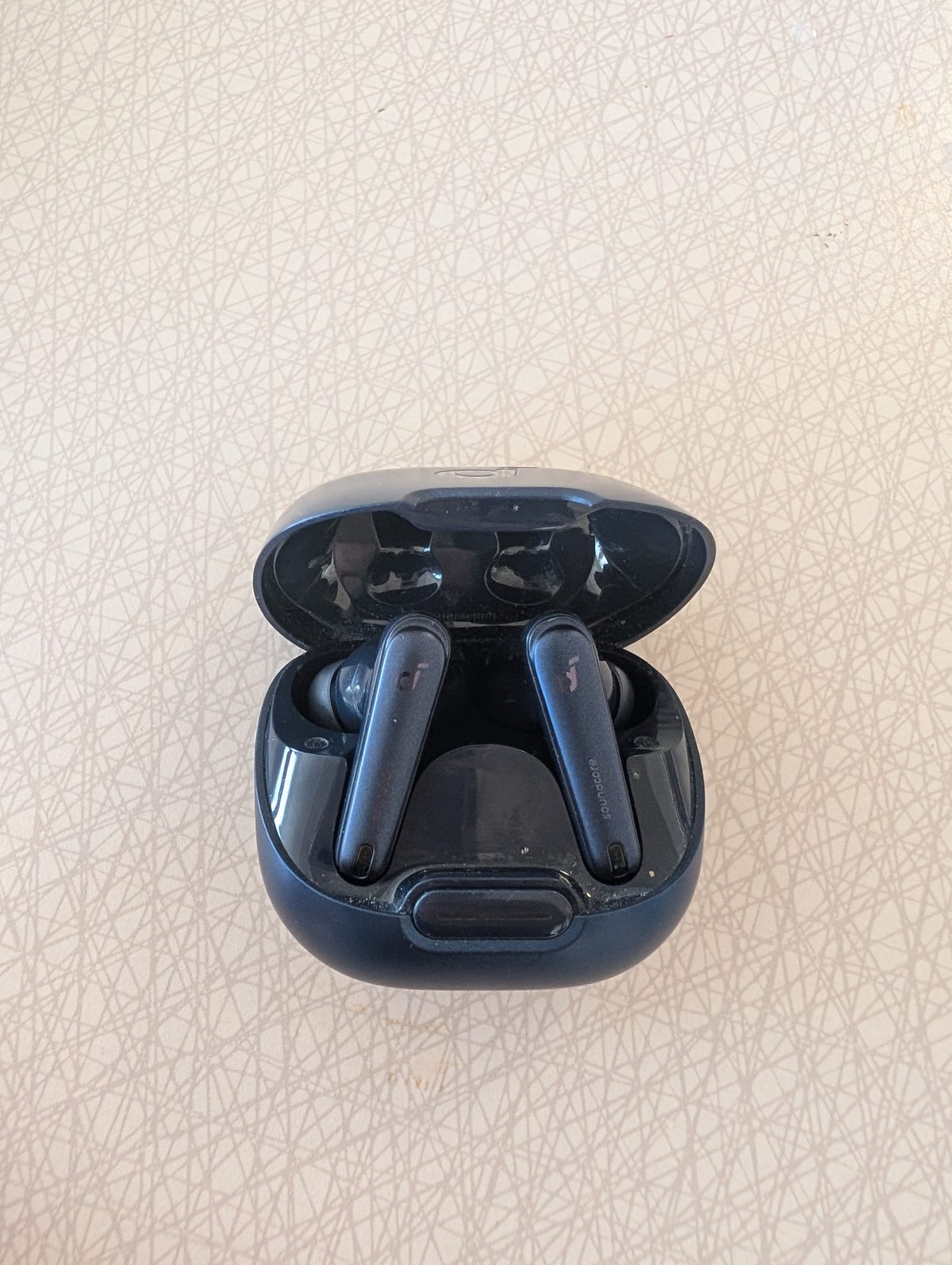
Anker Soundcore Liberty 4 NC — The Honest In-Ear Purchase
Published 10 May 2026 · Updated May 2026
LDAC audio quality and ANC that genuinely competes with earbuds at three times the price, in something small enough to forget is in your pocket. The battery will eventually degrade — that is true of every sealed earbud — but at 899 SEK (€82) the value while it lasts is the best I found.
Link updates to your region automatically
This article is different from most on this site, and I want to be direct about why.
The Durable Ledger runs on a philosophy of buying once: quality construction, long lifespan, repairability, and a total cost of ownership that beats repeated cheap replacements. The Anker Soundcore Liberty 4 NC do not fit that framework, and I am not going to pretend they do. The sealed lithium batteries inside them will degrade and the earbuds will eventually be replaced. That is true of every pair of true wireless earbuds at any price point — Sony, Apple, Bose, and Anker alike. No sealed battery lasts a decade of daily use.
What I can evaluate honestly: which earbuds make best use of a two-year budget in a category that does not currently offer a buy-once option. I bought these in July 2025 after significant research. At 899 SEK (€82) with LDAC and active noise cancellation that competes with earbuds at three times the price, the answer was clear.
The context
I have worn Sony WH-1000XM3 over-ear headphones since February 2020. They are still working perfectly — excellent sound and noise cancellation, among the best I have used. The limitation is physical: over-ear headphones are not pocketable. For daily commuting and general use where I want something I can put in a shirt pocket without thinking about it, they were the wrong form factor.
The research question was specific: best ANC and sound quality without paying 3,000 SEK (€273). Not a budget hunt for its own sake — I wanted earbuds that would genuinely perform, just without the premium price tag. LDAC support was important for Android users; it transmits audio at up to 990 kbps versus standard Bluetooth SBC at 328 kbps, and the difference in high-frequency detail and stereo separation is audible on well-recorded music.
Travel was a key part of the brief. I do a fair amount of work travel — flights, 2–3 night trips — and have made it something of a sport to optimise how much I can pack into a single backpack. Something that disappears into a pocket or the corner of a bag without a second thought, and still delivers real ANC on a long flight, was exactly the use case.
The Soundcore Liberty 4 NC came up consistently as the standout option at this price level. Community research on ANC performance and LDAC implementation highlighted the quality-to-cost ratio as anomalous. I verified those claims across multiple independent sources before buying. They held up.
What they are
The Soundcore Liberty 4 NC are sealed true wireless earbuds with active noise cancellation and LDAC Bluetooth. The ANC uses a hybrid system — external and internal microphones — and performs meaningfully above what this price point typically delivers. Community testing and my own use confirms that the low-frequency noise reduction on commutes and in open-plan environments is genuinely useful, not theatrical.
The sound signature is honest: the tuning favours clarity over the exaggerated bass that makes cheap earbuds sound impressive for ten seconds before becoming fatiguing. Vocals are clear, the high-end is present without being harsh, and the stereo image has width. At the LDAC bitrate, the resolution is closer to the Sony XM5 than the price difference would suggest.
Multipoint connection — paired simultaneously to a laptop and a phone, switching between them automatically when audio starts on either device — works cleanly. This is the feature that separates earbuds for daily work from earbuds for commuting only.
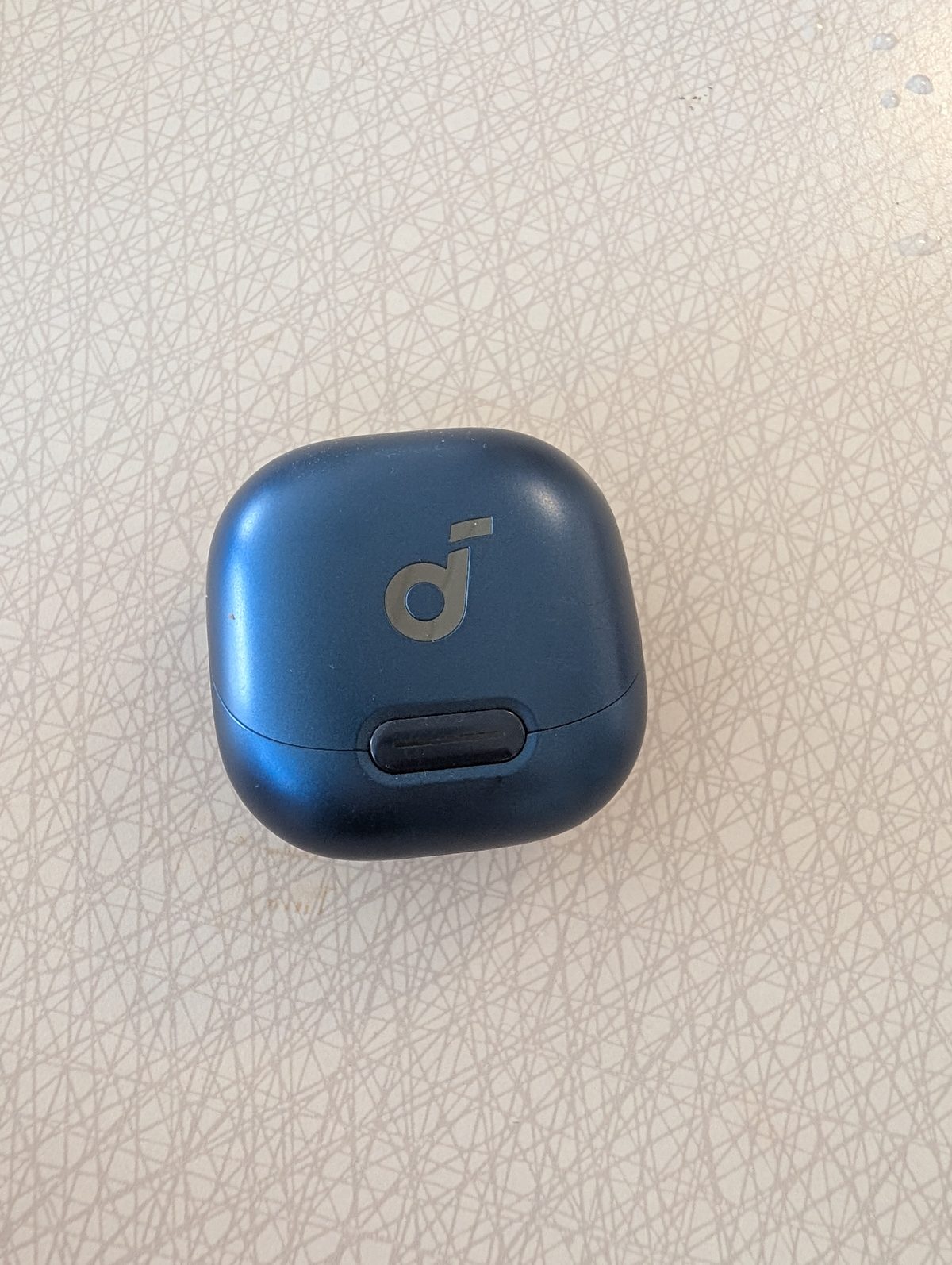
The physical size is the other thing worth stating plainly: these are small. They disappear into a pocket. Putting them on and taking them off takes seconds. After years of keeping over-ear headphones nearby when I wanted noise cancellation, the casual accessibility of in-ear earbuds is a real change in how I use them. They are in use far more often because the friction of using them is lower.
Ownership record
Bought July 2025. 899 SEK (€82).
Ten months in at time of writing. Battery performance remains at rated levels — no degradation yet, which is consistent with the expected 18–30-month degradation timeline.
How they perform in use
Daily use since July 2025. Commuting, remote work sessions, travel, general listening. The ANC does what I needed: road noise, café ambient sound, and open-plan office noise are reduced to a manageable level. On flights they perform well — long-haul cabin noise drops to something comfortable, which is the use case where ANC earns its place most clearly.
The portability has become a genuine part of how I travel. They go into the front pocket of a backpack and weigh nothing. For 2–3 night work trips where I am trying to pack light, they remove a decision entirely — there is no compromise in bringing them.
The one thing I would like more of is multi-device pairing. Two simultaneous connections is useful; three or four would be better for a setup with a phone, laptop, and tablet in rotation. It is a real limitation, though not a dealbreaker.
For in-ear ANC at 899 SEK, the overall performance is consistently above what I expected.
The LDAC benefit is real on an Android device with LDAC-capable output. The step in audio quality between SBC and LDAC is clearest on acoustic music and well-recorded jazz or classical — the stereo information and high-frequency detail are genuinely different. For compressed streaming on lower-quality sources, the difference is less pronounced.
The honest TCO statement
899 SEK (€82). Battery lifespan is the honest unknown — sealed lithium cells degrade, but at what pace depends on use patterns and temperature. The Sony WH-1000XM3 over-ear headphones are five years in with battery still performing decently, which is a more optimistic data point than the worst-case estimates. I would not assume two years as a hard ceiling for the Anker; three years of useful life is a reasonable working estimate, which puts the annual cost at around 300 SEK (€27).
What is certain is that the sealed battery is the limiting factor in this category regardless of brand or price. At 300 SEK (€27) per year against what you get, the value is clear.
Verdict
The most honest purchase documented here: a great in-ear earbud in a category that does not offer permanence. LDAC, strong ANC, and a form factor that fits in any pocket.
At 899 SEK (€82), with the battery lifespan stated plainly upfront, these are the correct answer to the question I was asking. The Sony XM3 stays for long listening sessions where the over-ear form factor is the right one. The Soundcore Liberty 4 NC comes everywhere else.
True Cost of Ownership
| Metric | Value |
|---|---|
| Price paid | 899 SEK |
| Estimated lifespan | 3 years |
| Cost per year | 300 SEK |
| Budget alternative over same period | 899 SEK |
Ownership record
Purchased July 2025 · Reviewed after 10 months of ownership
Good fit for
- ✓Daily commuters and remote workers who need ANC without the 3,000 SEK price tag
- ✓Work travel — flights, 2–3 night trips, backpack packing where every cubic centimetre counts
- ✓Android users who want LDAC audio quality at a fraction of typical prices
- ✓Anyone who values pocket-size portability over over-ear comfort
Not ideal for
- ✕Those expecting a 5-year ownership horizon — the sealed battery prevents this
- ✕Apple ecosystem users (LDAC is Android only; iOS gets AAC)
- ✕Critical listening or reference audio — good for the price, not a reference monitor
- ✕Those who want repairability — these are sealed and not user-serviceable
Pros
- +LDAC support: substantially higher bitrate than standard Bluetooth for Android users
- +ANC that meaningfully outperforms the price — verified through extensive pre-purchase research
- +Sound signature that favours clarity over exaggerated bass
- +Small enough to go in a shirt pocket without thinking about it
- +Multipoint connection: laptop and phone simultaneously, clean automatic switching
Cons
- −Battery degradation is inherent and inevitable — sealed lithium cells, not replaceable
- −Multipoint pairs to two devices only — three or four would be better for a multi-device setup
- −ANC produces some background hiss at higher settings
- −LDAC only benefits Android users — iOS falls back to AAC
Frequently Asked Questions
Are the Anker Soundcore Liberty 4 NC worth it compared to Sony or Apple?
At 899 SEK (€82) against Sony WF-1000XM5 at around 3,000 SEK (€273), you are buying roughly 75% of the ANC and audio performance for 30% of the cost. For most daily use — commuting, remote work, general listening — that gap is not audible in any way that affects the experience. The Sony has better ANC depth and slightly better sound resolution. Whether that difference is worth the extra 2,100 SEK (€191) is a question only you can answer, but for the majority of use cases the honest answer is no.
How does LDAC improve sound quality on these earbuds?
LDAC is Sony's high-bitrate Bluetooth codec, broadly licensed and supported on most Android devices. Standard Bluetooth SBC transmits at around 328 kbps; LDAC at its highest quality setting reaches 990 kbps. The difference is audible in high-frequency detail and stereo width, particularly on well-recorded music. The limitation: LDAC requires a compatible transmitter. iPhones and other Apple devices do not support it and fall back to AAC. For Android users with an LDAC-capable phone, the Soundcore Liberty 4 NC delivers a sound quality that normally costs significantly more.
How long do the Anker Soundcore Liberty 4 NC batteries last?
Per charge: approximately 6 hours in the earbuds, 36 hours total with the case. Over ownership: lithium cells lose capacity over charge cycles and will eventually degrade — but the pace varies. The Sony WH-1000XM3 over-ear headphones, five years in, still have decent battery life, which suggests real-world degradation is often slower than worst-case estimates. For the Anker, 10 months in shows no degradation yet. Three years of useful life is a reasonable working estimate; it may be more. The cells are sealed and not replaceable, which is why these are not a buy-once product — not because they will definitely fail in two years, but because the option to replace cells is not there when they eventually do.
Why are these listed as not a buy-once product on this site?
The buy-once designation is reserved for products with a realistic 10-year or longer ownership horizon when properly maintained. No true wireless earbuds meet this standard — the sealed lithium batteries are the constraint, and it applies to Sony, Apple, Bose, and Anker equally. The Soundcore Liberty 4 NC are the best value I found within that constraint. The right question for this category is not 'will these last forever' but 'which earbuds make best use of a two-year budget' — and at 899 SEK with LDAC and strong ANC, the answer was clear.
What was the reasoning behind buying these over more expensive options?
I was not looking for the cheapest earbuds — I was looking for the best ANC and sound quality without paying 3,000 SEK. The Sony WH-1000XM3 over-ear headphones I already owned cover long listening sessions well, but they are not pocket-sized. For travel and daily carry — particularly work trips where I am optimising what fits in a backpack — I needed something small and capable. After reviewing community research on LDAC implementation and ANC performance at this price level, the Soundcore Liberty 4 NC were clearly ahead of the alternatives. The 3,000 SEK (€273) options are better, but not 2,100 SEK (€191) better for my use case.